Why Canggu Is Bali's Top Property Investment Hotspot
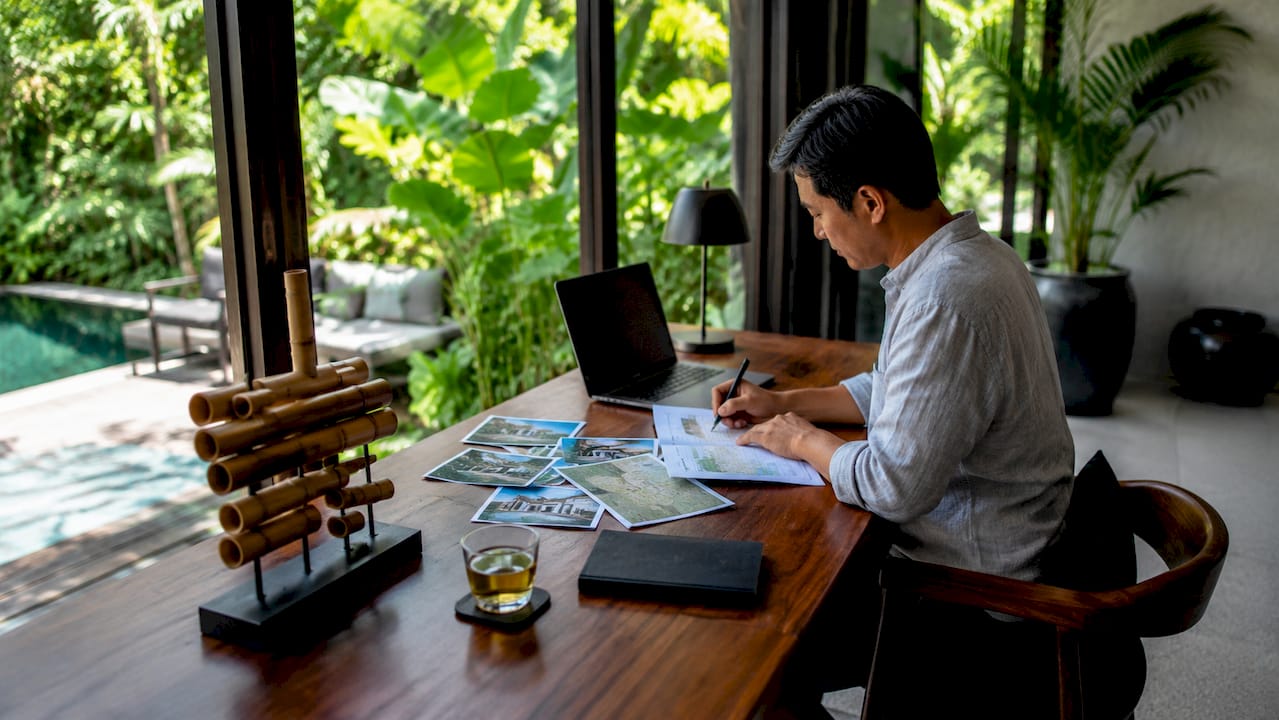
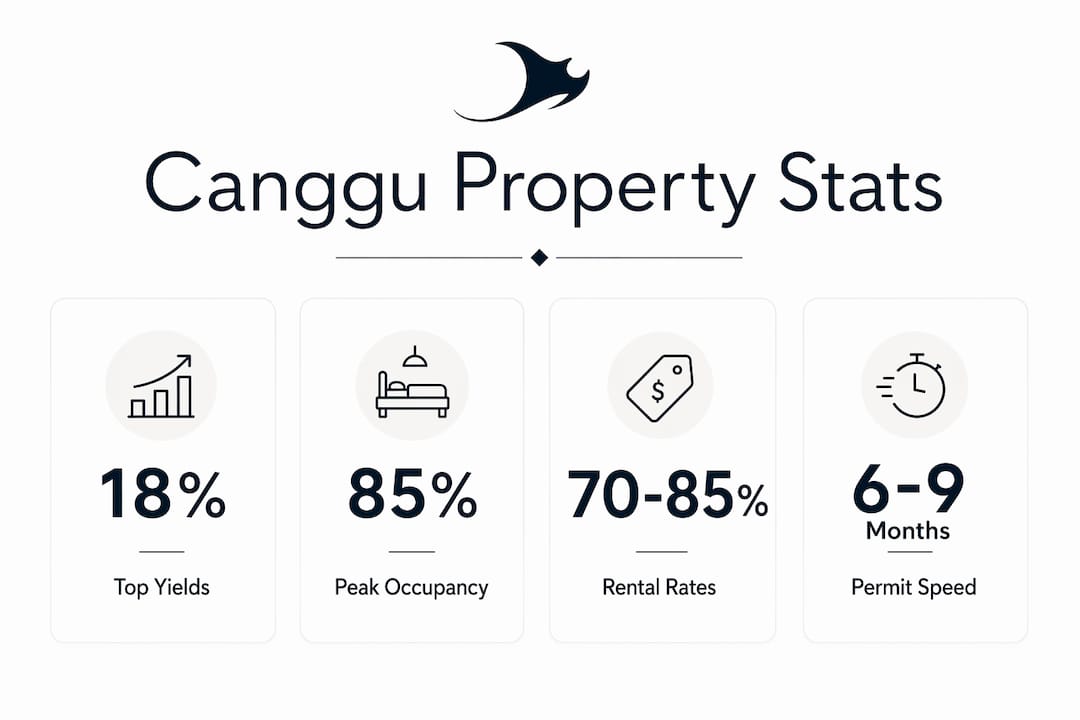
Why Canggu Is Bali's Top Property Investment Hotspot ! Investor reviewing property listings in Balinese villa office Canggu is defined as Bali's highest-yielding residential investment zone, where gross rental yields reach 10–18% for prime villas.
Why Canggu Is Bali’s Top Property Investment Hotspot
Canggu is defined as Bali’s highest-yielding residential investment zone, where gross rental yields reach 10–18% for prime villas. No other area on the island combines that return profile with year-round demand from digital nomads, surfers, and upscale tourists. The reasons why Canggu is a property investment hotspot come down to three converging forces: a globally diverse tenant base that keeps occupancy high, a maturing regulatory framework that rewards compliant buyers, and infrastructure upgrades that are lifting land values across the corridor. This article breaks down each force and tells you exactly what they mean for your capital.
What makes Canggu’s rental demand unique and sustainable?
Canggu’s demand profile is broader than any other Bali investment area. Year-round demand comes from remote workers, expatriates, entrepreneurs, and tourists, which means the market does not collapse between peak seasons the way resort-only destinations do. That diversity is the single most important structural advantage for investors.
The visitor mix breaks down into three distinct segments:
- Short-stay tourists booking 7–14 night villa stays, primarily from Australia, Europe, and the United States, who drive the highest nightly rates
- Digital nomads on monthly or quarterly leases, who provide predictable income and lower turnover costs
- Long-term expatriates seeking annual rentals, who offer the most stable cash flow but at lower per-night equivalents
Peak-season occupancy hits 70–85% for well-managed prime villas. That figure matters because it translates directly into the headline yields that attract investors in the first place.
The lifestyle ecosystem reinforces demand. Canggu’s concentration of surf breaks, coworking spaces, wellness studios, and restaurant strips creates the kind of self-sustaining community that tenants return to repeatedly. Amenities now extend beyond private pools to include coworking facilities, recreational spaces, and wellness features that the digital nomad demographic specifically seeks. Properties that include these features command a measurable premium over generic villa stock.

Pro Tip: Track Canggu’s booking demand trends before committing to a specific micro-location. Occupancy data by neighborhood tells you far more than area-wide averages.
How do zoning laws affect property investment in Canggu?
Zoning compliance is the single largest legal risk in Canggu real estate, and most first-time investors underestimate it. Indonesian law divides Canggu into three primary zones: K1 (residential only), K2 (commercial use permitted), and K3 (mixed-use). Short-term rentals are only legal in K2 and K3 zones, which immediately disqualifies a significant portion of available stock from operating as vacation rentals.
The permit structure adds another layer of complexity. Investors need to verify two documents before any purchase:
- Pondok Wisata license — the specific operating permit for short-term villa rentals, required for legal commercial operation
- PBG (Building Approval Permit) — the successor to the old IMB building permit, confirming the structure was built to code
Properties that already hold both documents skip a 6–9 month permit backlog typical of the regional government processing queue. That time saving has real financial value. A villa sitting idle for nine months while permits clear is a villa generating zero income.
Fully compliant properties command price premiums for exactly this reason. Buyers pay more upfront but receive a faster path to revenue and a cleaner resale story. Non-compliant properties may look cheaper on paper, but enforcement actions have increased in frequency since 2024, and the risk of forced closure is real.
Pro Tip: Always request a certified copy of the Pondok Wisata license and PBG before signing any purchase agreement. A local notary (notaris) and a qualified Indonesian property lawyer should review both documents independently.
How has the Canggu property market shifted through 2026?
The Canggu market has moved decisively from speculative buying to a professional investment environment. The 2026 normalization phase means micro-location, management quality, and zoning compliance now determine net returns more than raw land price. Buyers who entered in 2021–2022 chasing any available plot have largely been replaced by investors running proper financial models.
The table below captures the two market eras clearly:
| Factor | 2021–2023 speculative phase | 2024–2026 normalization phase |
|---|---|---|
| Buyer behavior | Buy anything, yields will follow | Selective buying based on verified income models |
| Product focus | Generic small villas, low build cost | High-spec resort-style communities |
| Zoning diligence | Often skipped | Non-negotiable |
| Management approach | Passive, owner-managed | Professional third-party management |
| Yield expectation | Gross 15%+ cited freely | Net 6–10% after fees accepted as realistic |
Oversupply of generic small villas in pockets like Batu Bolong has pushed nightly rates down for low-specification stock. This is not a market-wide problem. It is a product-quality problem. High-spec villas with strong management continue to hold occupancy and rates.
“The investors succeeding in Canggu right now are treating it like a business, not a passive asset. They have verified financial models, professional managers, and properties that genuinely stand out in a crowded listing environment.”
Emerging outer corridors are the most interesting Canggu investment opportunity for 2026. Seseh and Pererenan offer entry prices 20–30% below prime central zones like Berawa, with comparable lifestyle appeal and improving infrastructure. These areas suit investors who want appreciation upside without paying peak Berawa prices.
How does Canggu compare with other Bali investment areas?
Canggu sits at the top of Bali’s investment hierarchy when yield, lifestyle, and demand depth are measured together. The comparison below shows where it stands against Seminyak, Uluwatu, and the emerging Kedungu corridor.
| Area | Gross yield range | Demand profile | Infrastructure | Entry price |
|---|---|---|---|---|
| Canggu (prime) | 10–18% | Year-round, diverse | Established but congested | High |
| Seminyak | 8–13% | Tourist-heavy, seasonal peaks | Mature | High |
| Uluwatu | 9–14% | Surf and luxury tourism | Improving | Medium |
| Kedungu | 7–11% | Early-stage, surf-focused | Limited | Low |
Seminyak offers comparable entry prices but a narrower demand base that skews toward short-stay tourists. Uluwatu delivers strong yields for surf-oriented properties but lacks the year-round community depth that Canggu’s digital nomad population provides. Kedungu is the speculative play: lower prices, higher appreciation potential, but limited current infrastructure.
Canggu’s primary disadvantage is traffic congestion. The road network between Berawa and Batu Bolong is genuinely constrained, and guest satisfaction scores reflect it. Infrastructure projects including the Bali Urban Rail are targeting completion in 2027–2028, which should relieve pressure on key corridors and lift land values near transit nodes. Investors buying now are positioned ahead of that catalyst.
Liquidity is another Canggu advantage. The volume of international buyers active in the market means resale timelines are shorter than in less established areas. A well-located, compliant villa in Berawa or Pererenan has a genuine secondary market. The same cannot be said for early-stage areas like Kedungu.
What practical steps maximize returns on Canggu property?
The most successful investors treat Canggu property as an active business, not a passive asset. That mindset shift changes every decision from property selection to ongoing management.
The steps that consistently separate high performers from average ones are:
- Choose the right micro-location first. Berawa delivers the strongest combination of demand, amenities, and resale liquidity. Pererenan and Seseh offer better entry prices with growing appeal. Avoid saturated generic pockets in central Batu Bolong unless the property specification is genuinely exceptional.
- Verify net income, not gross. Professional management fees run 15–25% of gross revenue. After maintenance, utilities, and vacancy, net yields typically land between 6–10%. Any seller projecting 15% net is presenting gross figures without deductions.
- Engage professional management from day one. The difference between a well-managed and poorly managed villa in Canggu is not marginal. It determines whether you hit 75% occupancy or 45% occupancy. Understanding villa management fees in Bali before you buy is not optional.
- Prioritize amenities the market actually wants. Private pools are baseline. Coworking-ready spaces, fast fiber internet, wellness features, and outdoor entertainment areas are the differentiators that command premium nightly rates from digital nomads and upscale travelers.
- Confirm all permits before exchange. Zoning, Pondok Wisata license, and PBG must all be verified independently. No exceptions.
Pro Tip: Request a 12-month income statement from the current operator, not a projected model. Actual historical data from a managed villa tells you what the property genuinely earns after all costs.
Key takeaways
Canggu is Bali’s strongest property investment market because its year-round demand base, high gross yields, and improving infrastructure create returns that no other area on the island currently matches at scale.
| Point | Details |
|---|---|
| Gross yields lead Bali | Prime Canggu villas deliver 10–18% gross yields with 70–85% peak occupancy. |
| Zoning compliance is non-negotiable | Only K2 and K3 zoned properties can legally operate short-term rentals. |
| Net yields differ from gross | After management fees of 15–25%, realistic net returns land between 6–10%. |
| Outer corridors offer upside | Seseh and Pererenan entry prices run 20–30% below prime Berawa with growth potential. |
| Infrastructure is a 2027 catalyst | Bali Urban Rail completion is projected for 2027–2028, lifting values near transit nodes. |
What I’ve learned watching Canggu’s market mature
I’ve watched Canggu go from a surf village with a handful of villas to one of Southeast Asia’s most watched property markets. The transformation has been fast, and the mistakes investors make have been remarkably consistent across every cycle.
The biggest one is confusing a great lifestyle with a great investment. Canggu is genuinely one of the most enjoyable places on earth to spend time. That does not automatically make every property in it a sound financial decision. I’ve seen buyers pay premium prices for K1-zoned land because they loved the neighborhood, then discover they cannot legally operate a short-term rental on it. That is an expensive lesson.
What I find genuinely encouraging about 2026 is the professionalization of the market. The buyers I respect are running proper due diligence, working with qualified Indonesian legal counsel, and stress-testing their financial models against realistic occupancy scenarios. They are also paying close attention to what renters actually want, not what was popular five years ago. The digital nomad demographic has real preferences: fast internet, dedicated work space, and proximity to community. Properties that deliver those features are outperforming everything else in the market right now.
My honest view is that Canggu still offers one of the best risk-adjusted returns in Southeast Asian real estate, but only for investors who approach it with discipline. The speculative window has closed. The professional window is wide open.
— Francesco
Explore Canggu’s luxury villa investment options with Mantavillas
Mantavillas manages a curated portfolio of high-specification luxury villas across Bali’s most in-demand investment corridors. For investors serious about Canggu, the platform offers both acquisition-ready properties and full villa management in Canggu that covers licensing compliance, guest services, and revenue optimization.
The Luxe 2BR Tropical Villa in Canggu represents exactly the kind of high-spec, premium-positioned property that outperforms generic stock in the current market. Mantavillas also provides transparent management pricing structures so you can model net yields accurately before committing. If you are evaluating Canggu investment opportunities, this is the place to start.
FAQ
What are typical rental yields for Canggu villas?
Gross rental yields in Canggu range from 10–18% for prime, well-managed villas. After professional management fees of 15–25%, net yields typically land between 6–10%.
Can foreigners legally own property in Canggu?
Foreigners cannot hold freehold title in Indonesia but can invest through leasehold agreements (typically 25–30 years with renewal options) or through a legally structured Indonesian entity (PT PMA). Always engage qualified Indonesian legal counsel before purchasing.
Which Canggu zones allow short-term villa rentals?
Only K2 (commercial) and K3 (mixed-use) zoned properties can legally operate short-term rentals. K1 residential zones prohibit commercial rental activity, and operating without the correct zoning and a Pondok Wisata license carries enforcement risk.
How does Canggu compare to Seminyak for investment?
Canggu delivers higher gross yields (10–18% versus Seminyak’s 8–13%) and benefits from a more diverse, year-round demand base driven by digital nomads and expatriates. Seminyak skews more heavily toward seasonal tourist demand.
What is the best micro-location within Canggu for investors?
Berawa offers the strongest combination of demand depth, lifestyle amenities, and resale liquidity. Pererenan and Seseh provide entry prices 20–30% lower than Berawa with comparable lifestyle appeal and growing infrastructure, making them the best options for investors prioritizing appreciation upside.
Recommended
- Why Canggu Villas Are Trending in 2026: Key Insights
- Why Invest in Bali Luxury Real Estate in 2026
- Bali for Sale: Best Real Estate Options 2026 | Manta Villas
- Explore Canggu Villas for Your Perfect Getaway | Manta Villas