Securing a Villa with Private Pool: A Family Safety Guide
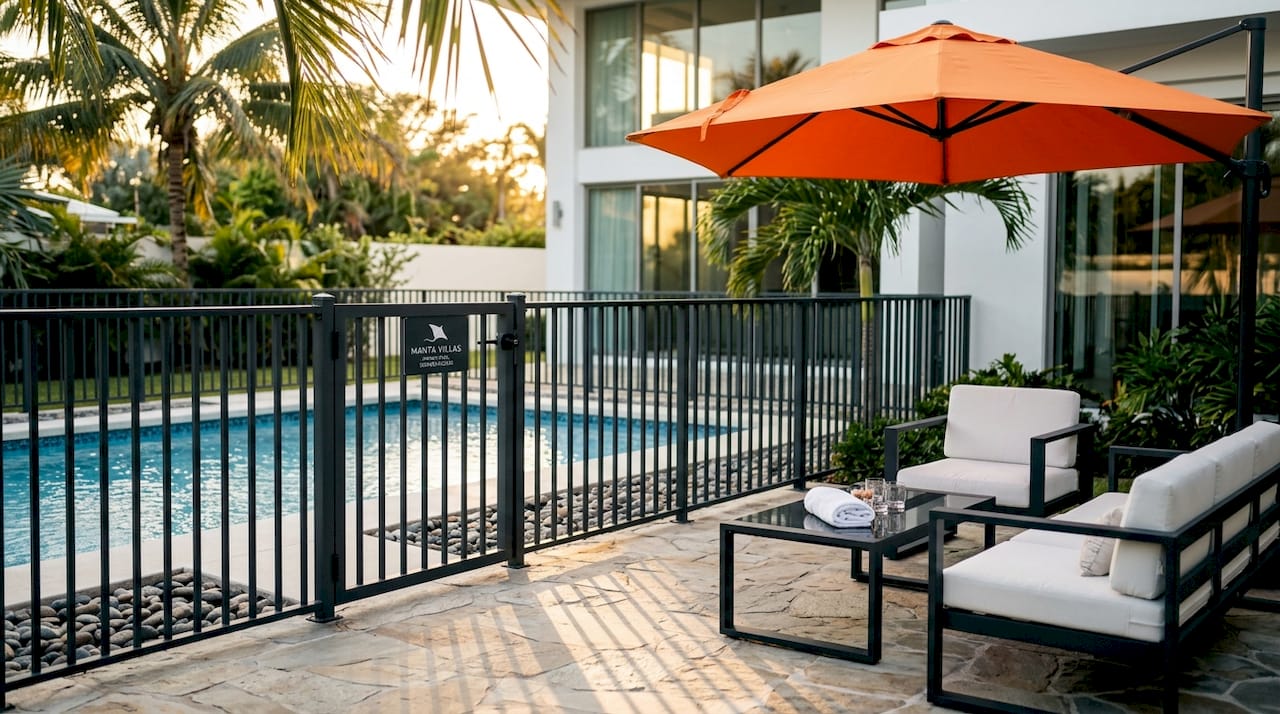
Securing a Villa with Private Pool: A Family Safety Guide ! Luxury villa pool with safety fencing and security keypad A luxury villa with a private pool is defined by one non-negotiable standard: every physical barrier, alarm, and management protocol must perform reliably before your family ever enters the water.
Securing a Villa with Private Pool: A Family Safety Guide
A luxury villa with a private pool is defined by one non-negotiable standard: every physical barrier, alarm, and management protocol must perform reliably before your family ever enters the water. Securing a villa with a private pool means layering four-sided fencing, self-closing gates, smart alarms, and professional management oversight into a single system that leaves no gap. The CPSC recorded at least 64 pool drownings in vacation rentals involving children under 15 as of May 2026. That number reflects a direct consequence of treating pool safety as an aesthetic feature rather than a performance standard. This guide gives you the exact framework to verify, test, and maintain that standard at any luxury villa you book.
What physical safety features are essential for securing a villa’s private pool
The industry term for this category is aquatic barrier compliance, and it covers every physical element that controls access to the pool. Four-sided fencing at least 4 feet high with self-closing, self-latching gates is the baseline requirement recognized by safety authorities worldwide. A fence that only encloses the backyard perimeter does not meet this standard. The pool itself must be isolated on all four sides, independent of the house or garden wall.
Many luxury villas look the part without meeting the substance. Beautiful wrought-iron fencing with decorative gaps wide enough for a child to climb through, or a gate that requires a manual push to close, fails the standard regardless of how premium it appears. Before booking, request photos or video of the pool barrier from every angle, not just the marketing shot from the sun deck.
The core physical safety features to verify at any villa with pool security include:
- Four-sided non-climbable fencing at minimum 4 feet high, with no horizontal rails that act as footholds
- Self-closing, self-latching gates that return to the closed and locked position without manual assistance
- Gate and door alarms that trigger when the barrier is opened without authorization
- Anti-entrapment drain covers compliant with the Virginia Graeme Baker Pool and Spa Safety Act, which mandates specific drain cover designs to prevent suction entrapment
- Pool alarms that detect entry into the water and alert caregivers immediately
Alarms and anti-entrapment drain covers function as a second layer of protection when a barrier is breached. No single feature is sufficient on its own. The combination of fencing, gate hardware, and alarms creates the redundancy that makes private pool safety tips meaningful rather than theoretical.
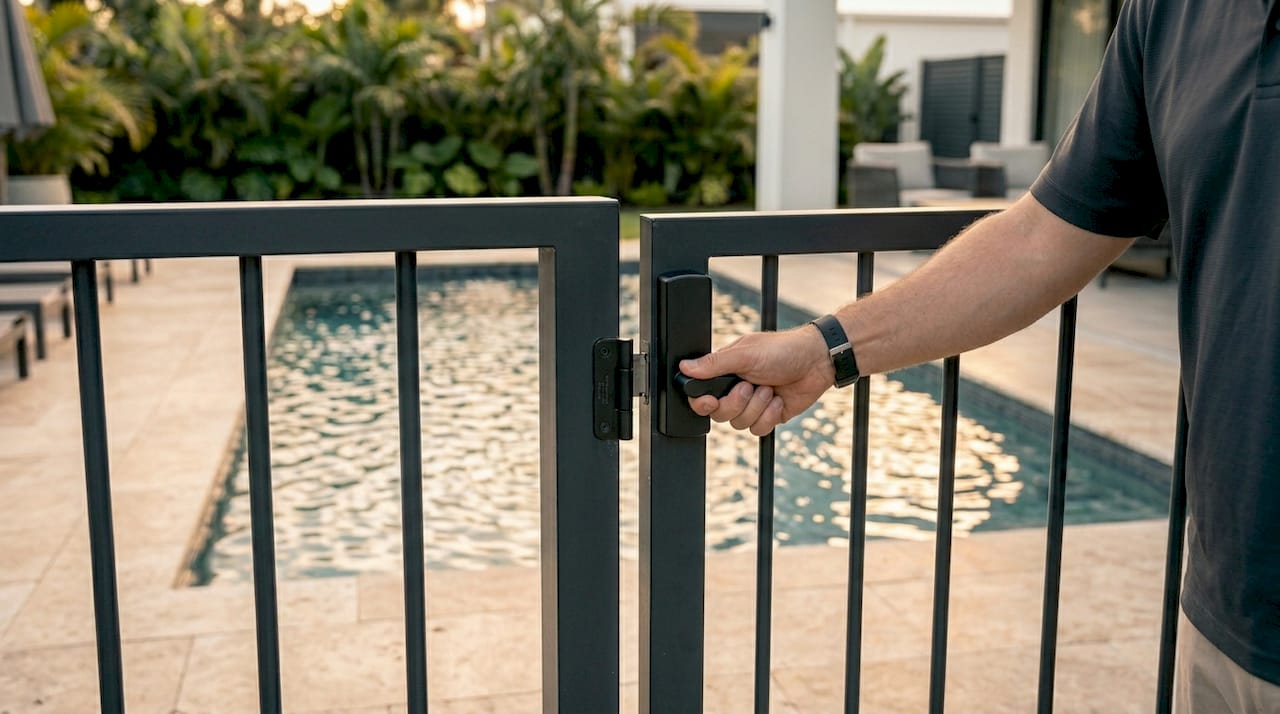
Pro Tip: On arrival, push the pool gate open to roughly 45 degrees and release it. It must close and latch without any help from you. If it hesitates, sticks, or swings back without latching, treat the pool as off-limits until management corrects the hardware.
title="YouTube Video"
style="position: absolute; left: 0; top: 0; height: 100%; width: 100%; border: none;"
loading="lazy"
allow="accelerometer; autoplay; clipboard-write; encrypted-media; gyroscope; picture-in-picture"
allowfullscreen
>
How to perform a thorough pool safety inspection when arriving at your villa
A professional pool safety inspection follows a structured sequence, and you can replicate the core of it yourself in under ten minutes. Routine verification of pool safety standards confirms ongoing protection effectiveness, which matters because wear, humidity, and salt air degrade hardware faster in tropical climates like Bali. Run this inspection the moment you arrive, before luggage is unpacked.
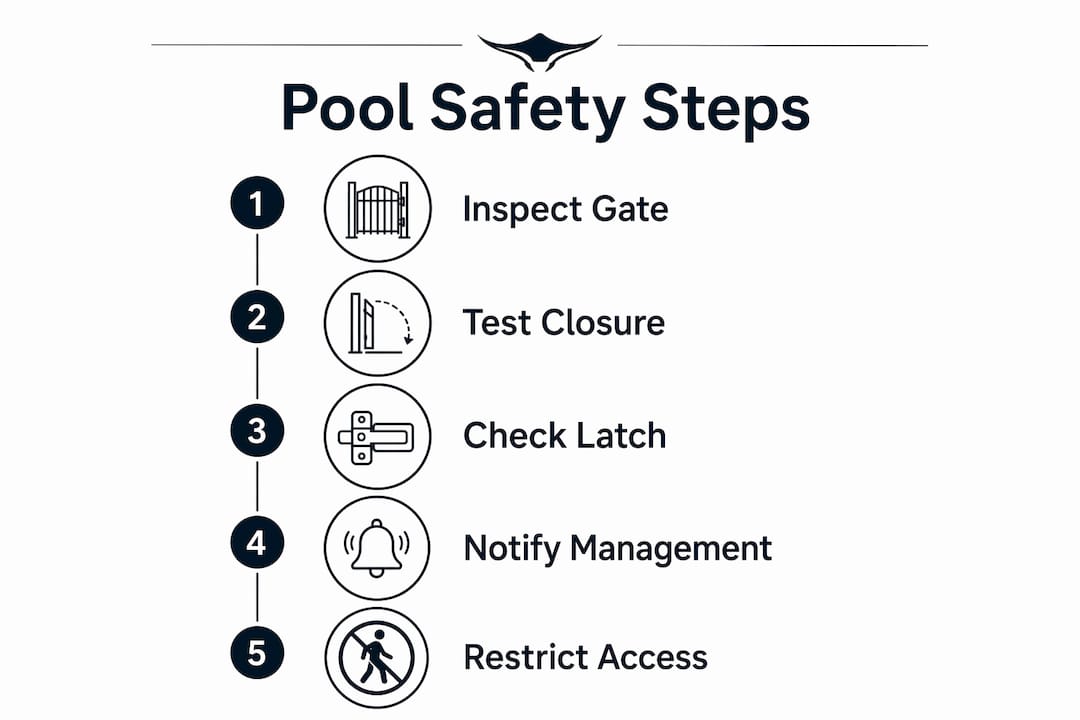
Follow this sequence every time:
- Open the gate 12 inches and release. The gate must swing fully closed and latch without assistance. This tests the spring tension under minimal load.
- Open the gate to 45 degrees and release. Repeat the closure test. A gate that passes at 12 inches but stalls at 45 degrees has insufficient spring tension.
- Open the gate fully and release. The gate must still close and latch. Full-open position is the hardest test for the spring mechanism.
- Test the latch manually. Confirm the latch engages positively. It should not rattle, slip, or require repositioning.
- Trigger the gate alarm. Open the gate and confirm the alarm sounds within three seconds. Check that the alarm battery indicator shows a full charge.
- Measure barrier height. Use a tape measure or your forearm as a rough reference. The fence must clear 4 feet at every panel, including corners.
- Inspect drain covers. Confirm covers are secured, not cracked, and sit flush with the pool floor.
| Test step | Expected result | Failure sign |
|---|---|---|
| Gate close from 12 inches | Full closure and latch engagement | Gate stops short or latch misses |
| Gate close from full open | Consistent closure without manual help | Gate slows and stalls before latching |
| Alarm trigger | Audible alert within 3 seconds | No sound or delayed response |
| Barrier height check | Minimum 4 feet at all points | Any panel below 4 feet |
| Drain cover inspection | Flush, secured, undamaged | Loose, cracked, or missing cover |
Gates and latches can fail silently due to wear and environmental factors, which is why a single test pass is not enough. Run the full sequence at least twice, ideally at different times of day, since metal hardware expands in heat and can perform differently in the afternoon versus the morning.
If any test fails, restrict pool access immediately. Notify villa management in writing, photograph the deficiency, and request a documented repair before allowing children near the water. A well-managed property will respond within hours. A poorly managed one will tell you something important about the rest of the villa’s maintenance standards.
Pro Tip: Repeat the gate closure test on day two of your stay. Hardware that passed on arrival can shift after a full day of use, especially in high-humidity environments. Consistent performance across multiple tests is the only reliable indicator of a safe gate.
What technology and smart home systems can enhance villa pool security
Physical barriers define the minimum standard. Smart home technology raises it to a level that gives you real-time awareness of your property even when you are not watching. Smart home systems including motion sensors, alarms, and AI-enabled CCTV add a digital security layer that enables remote monitoring and occupancy simulation. For a luxury villa rental, these systems are no longer optional upgrades. They are expected features at the premium tier.
The technology stack that delivers meaningful villa with pool security includes:
- Smart locks on pool gates and villa entry points that log every access event and allow remote locking from a phone app
- Motion sensor lighting around the pool perimeter and garden paths, which deters unauthorized access and eliminates dark zones at night
- Connected gate and door alarms that push instant notifications to your phone rather than relying solely on an audible siren
- High-definition CCTV cameras with remote live view, covering pool entry, the pool deck, and villa perimeter
- Occupancy simulation systems that vary interior lighting and audio on a schedule to signal an occupied property to anyone watching from outside
Good physical security extends beyond the pool to the entire villa property, including window protections, sturdy perimeter gates, and coordinated lighting. A family staying at a private pool villa in Seminyak benefits from all of these layers working together, not from any single device in isolation.
The practical value of connected technology is speed. A physical gate alarm alerts whoever is within earshot. A smart alarm alerts you on your phone within seconds, regardless of where you are on the property. That gap in response time is the difference between an incident and a near miss.
The role of villa management in maintaining pool and property security
Professional villa management ensures regular safety checks, alarm maintenance, guest communication, and coordination of local security resources. This is the layer most travelers overlook when evaluating a secure vacation villa, because it is invisible until something goes wrong. A well-run management operation runs gate function checks, tests alarm batteries, and inspects fencing integrity on a scheduled basis, not just between guest stays.
Management also handles the human side of pool security. That includes briefing guests on safety protocols at check-in, providing emergency contact numbers, and maintaining a clear escalation path if a safety deficiency is reported. For families traveling with young children, this communication layer matters as much as the hardware. Knowing exactly who to call and how fast they will respond is part of what you are paying for at the luxury tier.
Mantavillas operates this model across its Bali portfolio, coordinating routine inspections, local security staff, and guest safety briefings as standard practice. Properties like the 2BR villa in Canggu are maintained under this framework, which means the safety features you inspect on arrival have been verified before you got there.
When evaluating any villa management company, ask three specific questions before booking: How often are pool safety features inspected between stays? Who is the on-call contact for safety issues, and what is their average response time? Is there a written record of the last professional safety inspection? A management team that cannot answer all three clearly is not operating at the standard a family with children should accept.
Pro Tip: Send your safety questions to the management team before you book, not after. Response time and specificity of answers are the most reliable indicators of how seriously they take property maintenance. A vague reply to a direct question about gate inspection frequency is a red flag.
Key takeaways
Securing a villa with a private pool requires four-sided barrier compliance, repeated gate testing on arrival, smart technology integration, and professional management oversight working as a single coordinated system.
| Point | Details |
|---|---|
| Four-sided fencing is mandatory | Pool barriers must isolate the pool on all sides, not just the yard perimeter. |
| Test gates multiple times | Run the closure and latch test at least twice, at different times of day, to confirm consistent performance. |
| Layer physical and digital security | Combine fencing and alarms with smart locks, CCTV, and motion sensors for full coverage. |
| Management responsiveness matters | Ask specific inspection questions before booking to verify that safety protocols are actively maintained. |
| Restrict access if anything fails | Any failed inspection item means no pool access until management provides a documented repair. |
What I’ve learned about pool safety that most travelers miss
Most guests at luxury villas treat the pool gate the way they treat a hotel minibar: they notice it exists and then ignore it. That is the single most dangerous assumption you can make when traveling with children. I have reviewed enough safety reports and property inspections to know that a gate can look perfect and still fail the 45-degree release test. The spring tension degrades. The latch housing shifts. The alarm battery drains. None of these failures announce themselves visually.
The layered approach is not overcaution. It is the only approach that actually works. Physical barriers stop unsupervised access. Alarms catch the moments barriers are breached. Smart technology gives you real-time awareness when you are not physically present at the pool. Management ensures the hardware is maintained between your tests. Remove any one of those layers and you have a gap.
What I find most underestimated is the value of asking hard questions before you book. Families researching Bali villas with kids pools often focus on aesthetics and amenities. The right question is not “does it have a pool fence?” It is “when was the gate last tested, by whom, and what was the result?” That question separates properties that perform from properties that merely appear to.
Luxury travel should mean higher standards, not lower vigilance. The peace of mind you are paying for at a premium villa is only real if the safety infrastructure behind it has been verified, tested, and maintained. Anything less is just a beautiful backdrop.
— Francesco
Plan your secure Bali villa stay with Mantavillas

Mantavillas curates a portfolio of luxury Bali villas where pool safety features, smart home security, and professional management oversight are built into every property. Each villa undergoes routine safety inspections, and the management team is available around the clock to address any concern during your stay. From self-latching pool gates to connected alarm systems and coordinated local security staff, the properties listed on Mantavillas are maintained to the standard families with children should expect. Explore the full collection and contact the team directly to confirm the specific safety features at your chosen villa before you book.
FAQ
What is the minimum fence height for a private pool villa?
Pool fencing must be at least 4 feet high on all four sides of the pool, independent of the house or garden perimeter. The fence must also be non-climbable, with no horizontal rails that could serve as footholds.
How do I test a self-closing pool gate on arrival?
Open the gate to 12 inches, 45 degrees, and fully open, releasing it each time without assistance. The gate must close completely and latch at every position. Run the test at least twice to confirm consistent performance.
Are pool alarms required at vacation rental villas?
Pool alarms are recommended as a second layer of protection alongside fencing and gates. Some regional regulations require them, and they are standard practice at well-managed luxury villas. Confirm alarm functionality on arrival by triggering the gate alarm and verifying an audible response within three seconds.
What should I do if a pool gate fails the closure test?
Restrict all pool access immediately and notify villa management in writing with a photo of the deficiency. Do not allow children near the pool until management provides a documented repair and you have re-tested the gate yourself.
How does professional villa management improve pool security?
Professional management schedules regular inspections of gate hardware, alarm batteries, and fencing integrity between guest stays. It also coordinates local security staff and provides guests with emergency contacts and safety briefings at check-in.
Recommended
- Bali Villa with Kids Pool Guide for Families
- Bali Villa with Private Pool: Top Picks 2026 | Manta Villas
- Private Bali Villas with Private Pool | Manta Villas
- Family Villas: Your 2026 Guide | Manta Villas