Why Invest in Bali Luxury Real Estate in 2026
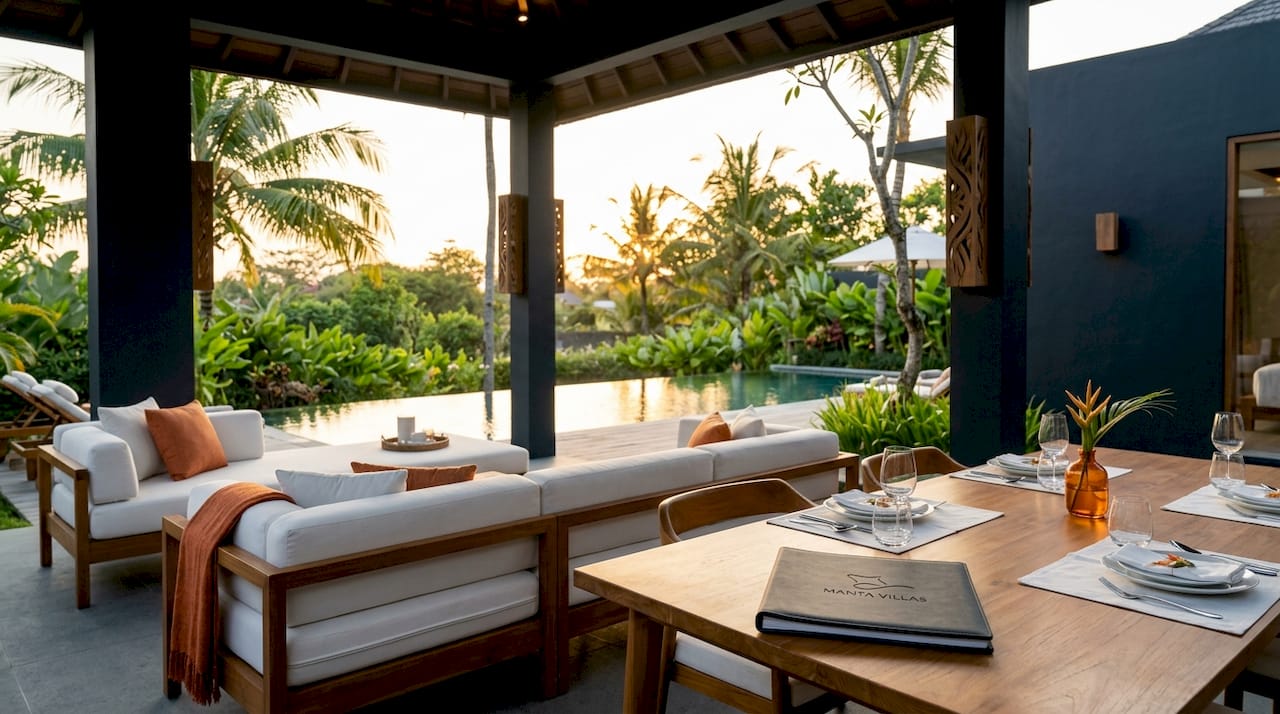
Why Invest in Bali Luxury Real Estate in 2026 ! Luxury Bali villa with pool at sunset Bali luxury real estate is defined as the highest-performing asset class in Southeast Asia's villa market, delivering average ROI above 12% annually with occupancy rates of 70 to 90% in prime locations.
Why Invest in Bali Luxury Real Estate in 2026
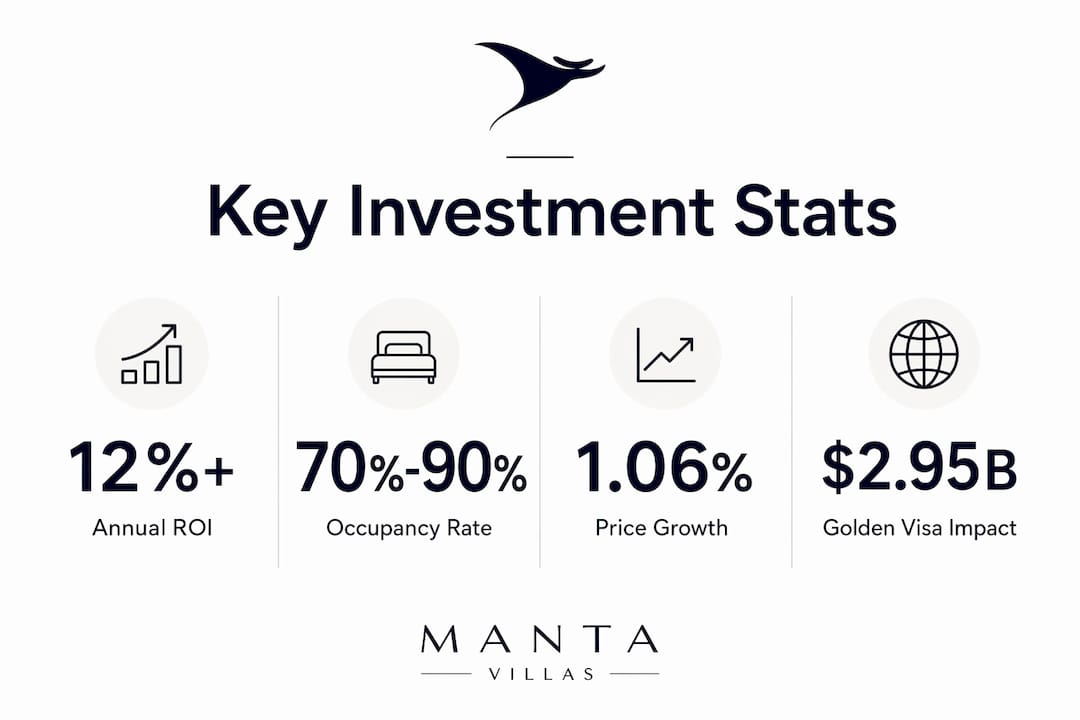
Bali luxury real estate is defined as the highest-performing asset class in Southeast Asia’s villa market, delivering average ROI above 12% annually with occupancy rates of 70 to 90% in prime locations. That figure alone separates Bali from the 3 to 5% yields typical of traditional property markets in Europe or Australia. Add Indonesia’s Golden Visa program, record tourism arrivals, and a compliance-driven market shift that rewards professionally managed properties, and the case for investing here becomes concrete rather than speculative. This guide breaks down exactly why Bali luxury property investment stands apart in 2026, and where the real opportunities lie.
Why invest in Bali luxury real estate: the financial case
Bali villa investment, the industry term for income-generating luxury residential property in Bali held under leasehold or freehold structures, consistently outperforms comparable asset classes on yield. The 12% average annual ROI is not a promotional figure. It reflects the combination of strong short-term rental demand, premium nightly rates in areas like Canggu, Seminyak, and Uluwatu, and relatively low acquisition costs compared to equivalent luxury markets in Phuket or the Algarve.
Occupancy rates of 70 to 90% in prime Bali micro-markets mean your asset is generating income for the majority of the calendar year. That is a fundamentally different proposition from a Paris apartment sitting vacant for four months or a ski chalet dependent on a single season. The consistency of demand is driven by Bali’s year-round appeal as both a leisure and wellness destination.

Residential property prices in Bali rose 1.06% year-on-year in Q4 2025 and 0.87% in Q1 2026, according to Bank Indonesia data. Modest price growth signals market stability rather than speculative overheating, which is exactly what long-term investors want to see. Capital appreciation in Bali is steady rather than volatile, making it suitable for wealth preservation as well as income generation.
| Investment Type | Average Annual ROI | Occupancy / Utilization | Capital Appreciation |
|---|---|---|---|
| Bali luxury villa (prime areas) | 12%+ | 70–90% | Steady, 1–2% annually |
| Traditional residential (Europe/Australia) | 3–5% | Seasonal or tenant-dependent | Market-dependent |
| Commercial real estate (global average) | 5–7% | Lease-dependent | Moderate |
| REITs (global average) | 4–6% | N/A | Correlated to equity markets |
Pro Tip: Never evaluate a Bali villa on gross average daily rate alone. Net yield analysis must account for management fees, platform commissions, maintenance, legal compliance costs, and vacancy periods. A villa with a high headline rate but poor management can underperform a modestly priced, well-run property by several percentage points annually.
How do tourism trends and the Golden Visa program drive demand?
Bali recorded 6.95 million international arrivals in 2025, a figure that directly supports the luxury rental market by sustaining high-quality demand across the calendar year. The active hotel pipeline of over 5,600 rooms concentrated in premium areas validates that institutional capital sees the same demand signals individual investors do. When hotel developers commit capital to a market, it confirms the rental thesis rather than threatening it.
Indonesia’s Golden Visa program has generated approximately US$2.95 billion in foreign investment by May 2026. The program grants residency stays of 5 to 10 years for high-net-worth foreigners, and that matters enormously for the rental market. Golden Visa holders are not two-week tourists. They are long-term residents who rent premium properties for months at a time, creating a more stable and higher-value demand profile than short-stay holiday visitors.
“Golden Visa holders contribute to a more stable, long-term rental demand profile, shifting Bali’s market from purely holiday rentals to sustained residency and investment.” — Kemenimipas Indonesia, 2026
The practical implication for investors is clear. A villa positioned to attract Golden Visa holders and digital nomads on extended stays commands consistent monthly income rather than relying on peak-season spikes. This shifts the investment model closer to a medium-term rental business, which carries lower operational friction and more predictable cash flow. Bali’s appeal as a premier luxury destination in 2026 is not accidental. It is the product of deliberate government policy combined with genuine lifestyle demand.
What regulatory and market shifts affect Bali property investment in 2026?
The single most consequential regulatory development in Bali’s luxury property market is the mandatory short-term rental compliance deadline of March 31, 2026. All short-term rental properties must demonstrate full legal compliance, including permits, licensing, and zoning alignment. Properties that fail to comply face delisting from major booking platforms and potential enforcement action. This is not a distant risk. It is already reshaping which properties attract buyers and which sit unsold.
The compliance mandate creates a structural advantage for professionally managed branded residences. Properties operating under a recognized management framework with documented permits command a premium, both in rental rates and in resale value. Compliant properties command premiums over unmanaged inventory, and that gap is widening as enforcement tightens. For investors evaluating entry points in 2026, legal structure is not a secondary consideration. It is the primary filter.
Beyond compliance, buyer preferences are shifting toward boutique eco resorts, wellness-focused properties, and architecturally authentic developments. Generic villa developments with cookie-cutter layouts are losing ground to properties that reflect genuine Balinese architectural identity, integrate sustainability features, and offer curated guest experiences. This is not aesthetic preference. It translates directly into higher nightly rates, stronger repeat bookings, and better reviews on platforms like Airbnb and Booking.com.
Key regulatory and market factors shaping Bali luxury property in 2026:
- Short-term rental compliance: Full legal permits and zoning alignment required by March 31, 2026, with platforms actively delisting non-compliant properties.
- Branded residence advantage: Professionally managed properties with operational moats attract institutional-grade buyers and command resale premiums.
- Sustainability and authenticity: Eco-certified and architecturally authentic developments outperform generic builds on occupancy and nightly rate metrics.
- Zoning enforcement: Micro-market zoning status directly affects what you can legally operate, making due diligence on land classification non-negotiable.
Pro Tip: Before committing to any Bali villa purchase, verify the property’s IMB (building permit), zoning classification, and operational license. A property without these documents is not a discount opportunity. It is a liability.
How to approach micro-markets and property types for capital appreciation
Bali is not a single market. Canggu, Uluwatu, Seminyak, Ubud, and Sanur each have distinct demand profiles, zoning environments, and buyer demographics. Micro-market precision including zoning, access, and environmental compliance is a critical differentiator in the luxury segment. Buying in the right region of Bali but the wrong pocket within that region can mean the difference between 85% occupancy and 55% occupancy.
Canggu and Uluwatu attract the highest concentration of high-spending international visitors and digital nomads, supporting premium nightly rates and strong year-round demand. Ubud appeals to wellness and cultural travelers willing to pay for authentic experiences, making it well-suited for boutique villa concepts. Seminyak remains the established luxury corridor with proven resale liquidity. Each micro-market rewards a different product type, and matching the two is where experienced investors generate outperformance.
| Micro-Market | Primary Demand Profile | Recommended Property Type | Zoning Consideration |
|---|---|---|---|
| Canggu | Digital nomads, surf culture, young affluent | Modern villa, co-living hybrid | Verify agricultural land restrictions |
| Uluwatu | Luxury travelers, honeymoon market | Cliff-top villa, boutique resort | Coastal zone compliance critical |
| Ubud | Wellness, cultural, retreat market | Eco villa, jungle retreat | Green zone and heritage rules apply |
| Seminyak | Established luxury, family market | Classic luxury villa | Most established zoning clarity |
| Sanur | Long-stay retirees, Golden Visa holders | Residential villa, managed residence | Favorable for long-term rental |
For foreign investors, the leasehold structure remains the primary legal vehicle, typically offering 25 to 30 year terms with renewal options. Freehold ownership through an Indonesian nominee structure carries legal risk and is not recommended without specialist legal counsel. Completed projects from proven developers with a track record of operational performance are significantly lower risk than off-plan purchases from first-time developers. Reviewing a current Bali villas for sale catalog from a reputable platform gives you a realistic benchmark for pricing and specification across micro-markets.
Exit strategy is a factor many first-time investors overlook. The most viable Bali real estate exit strategy types include resale to another foreign investor, sale to an Indonesian buyer, or conversion to a long-term managed rental asset. Properties with clean legal documentation, proven rental history, and professional management records sell faster and at better prices. Building that documentation from day one is not administrative overhead. It is the foundation of your exit value.
Key takeaways
Bali luxury villa investment delivers superior returns because it combines 12%+ annual ROI, 70 to 90% prime-area occupancy, and a compliance-driven market shift that systematically rewards legally structured, professionally managed properties.
| Point | Details |
|---|---|
| ROI advantage | Bali villas average 12%+ annual ROI versus 3–5% for traditional real estate markets. |
| Tourism and Golden Visa demand | 6.95 million arrivals in 2025 and US$2.95 billion in Golden Visa investment underpin rental demand. |
| Compliance as competitive moat | Legal compliance by March 31, 2026 separates premium assets from distressed inventory. |
| Micro-market selection | Canggu, Uluwatu, Ubud, and Seminyak each require matched product types for optimal performance. |
| Net yield discipline | Gross rental rates mislead. Net yield after all costs is the only metric that matters for ROI. |
What the Bali market actually rewards in 2026
I have watched investors enter Bali with a simple thesis: buy a villa, list it on Airbnb, collect returns. That approach worked in 2018. It does not work in 2026. The market has matured, and the compliance deadline of March 2026 has drawn a hard line between investors who did the legal groundwork and those who did not.
What I find most interesting about the current Bali luxury property market trends is that the winners are not necessarily the investors with the largest budgets. They are the ones who treated operational governance as seriously as acquisition price. A villa with full permits, a professional management partner, and authentic design commands a 20 to 30% premium in both nightly rate and resale value over an equivalent property that cut corners on compliance.
The Bank Indonesia data reinforces this. Advancing operational and legal structures underpin investor confidence more than speculative price gains. Bali is not a market where you flip properties in 18 months. It rewards investors who hold quality assets, maintain operational standards, and benefit from compounding rental income over a 5 to 10 year horizon. That aligns perfectly with the Golden Visa demographic now entering the market as both renters and buyers.
My advice to any investor evaluating Bali in 2026: prioritize legal clarity and management quality over headline yield projections. The best foreign property investment platforms in Bali are those that combine curated property selection with genuine operational expertise, not just a listing portal. The property management dimension of your investment is not a cost center. It is your primary risk management tool.
— Francesco
How Mantavillas supports your Bali investment
Mantavillas operates as a curated luxury villa platform in Bali, combining a portfolio of high-performing properties with professional management services designed specifically for investors who want returns without operational headaches.

Whether you are evaluating your first Bali acquisition or expanding an existing portfolio, Mantavillas provides access to properties with verified rental histories, full legal compliance documentation, and active management infrastructure. The Green Oasis 2BR Villa in Ubud is one example of a premium asset positioned in a high-demand wellness micro-market with strong year-round occupancy. For investors who already own a villa, Mantavillas’ villa management services handle compliance, bookings, and guest operations to maximize net yield. Explore the portfolio and connect with the team to discuss investment fit.
FAQ
What annual ROI can I expect from a Bali luxury villa?
Bali luxury villas in prime areas like Canggu and Uluwatu deliver average annual ROI above 12%, with occupancy rates of 70 to 90%. Net yield after management fees, maintenance, and compliance costs typically ranges from 8 to 10% for well-managed properties.
Can foreigners legally own property in Bali?
Foreign investors primarily use leasehold structures with 25 to 30 year terms and renewal options. Freehold ownership is restricted to Indonesian citizens, so foreign buyers should work with qualified legal counsel to structure acquisitions correctly.
What is the Golden Visa program and how does it affect Bali real estate?
Indonesia’s Golden Visa grants residency of 5 to 10 years to high-net-worth foreigners and has generated US$2.95 billion in foreign investment by May 2026. It expands the pool of long-term renters and second-home buyers, strengthening demand for premium Bali properties.
What is the March 2026 compliance deadline for Bali rentals?
All short-term rental properties in Bali were required to demonstrate full legal compliance, including permits, licensing, and zoning alignment, by March 31, 2026. Non-compliant properties face delisting from major booking platforms and reduced market value.
What is the best exit strategy for a Bali villa investment?
The most reliable Bali real estate exit strategy types are resale to a foreign investor, sale to an Indonesian buyer, or conversion to a long-term managed rental asset. Properties with clean legal documentation and proven rental records achieve faster sales and stronger prices.
Recommended
- Why Bali Is a Premier Luxury Destination in 2026
- Luxury House Bali: 2026 Edition | Manta Villas
- Bali for Sale: Best Real Estate Options 2026 | Manta Villas
- Bali Homes for Sale: Explore Your Options | Manta Villas