
Bali Real Estate Legal Structure: 2026 Foreign Buyer Guide
Bali Real Estate Legal Structure: 2026 Foreign Buyer Guide ! Man reviewing Bali property legal documents Bali real estate legal structure is defined by Indonesian law as a tiered system that reserves freehold ownership for citizens while offering foreigners three compliant pathways to acquire property.
Bali Real Estate Legal Structure: 2026 Foreign Buyer Guide
Bali real estate legal structure is defined by Indonesian law as a tiered system that reserves freehold ownership for citizens while offering foreigners three compliant pathways to acquire property. The Indonesian Basic Agrarian Law (UUPA No. 5/1960) prohibits foreigners from holding Hak Milik, the freehold title, in their own names. Instead, foreign investors must work within one of three recognized frameworks: leasehold (Hak Sewa), Right to Use (Hak Pakai), or ownership through a foreign-invested Indonesian company (PT PMA). Choosing the wrong structure creates real legal and financial exposure. This guide breaks down each option so you can invest in Bali with confidence and full compliance.
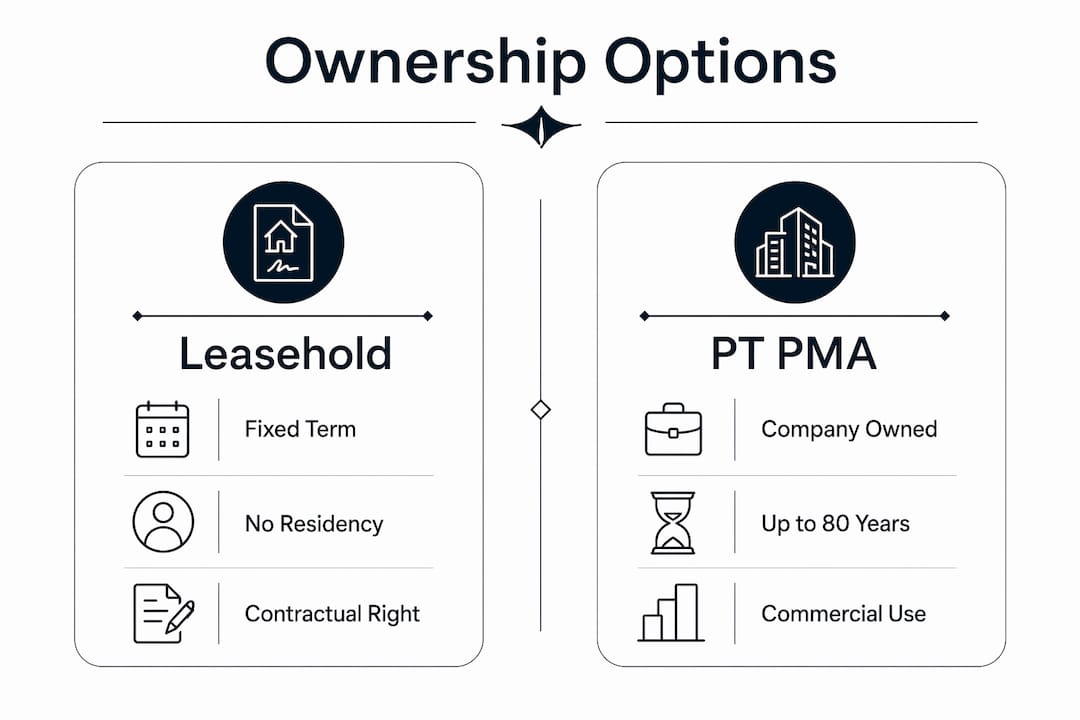
What are the legal ownership options for foreigners in Bali real estate?
Foreigners have three legal pathways to acquire property in Bali: leasehold, Hak Pakai, and PT PMA company ownership. Each carries different rights, durations, and eligibility requirements.
Leasehold (Hak Sewa)
Leasehold is a contractual right to use land or property for a fixed term. No Indonesian residency permit is required, which makes it the most accessible option for non-resident foreigners. Typical lease terms run 25–30 years, with extension options negotiated upfront. The contract is notarized but does not create a registered land title at the National Land Agency (BPN). Security depends entirely on the quality of the contract and the reliability of the Indonesian landowner.

Hak Pakai (Right to Use)
Hak Pakai is a registered title that grants foreigners the right to use and occupy land. To qualify, you must hold a valid Indonesian residency permit, either a KITAS (temporary stay permit) or KITAP (permanent stay permit). This title is registered with BPN, which gives it stronger legal standing than a leasehold contract. Hak Pakai is designed for personal residential use and is not intended for commercial rental operations by foreigners.
title="YouTube Video"
style="position: absolute; left: 0; top: 0; height: 100%; width: 100%; border: none;"
loading="lazy"
allow="accelerometer; autoplay; clipboard-write; encrypted-media; gyroscope; picture-in-picture"
allowfullscreen
>
PT PMA company ownership
A PT PMA is a foreign-owned Indonesian limited liability company. It can legally hold Hak Guna Bangunan (HGB, or Right to Build) and Hak Pakai titles in its own name. This structure suits investors who want to operate commercial rental businesses or build a property portfolio. Through sequential extensions, a PT PMA can hold HGB titles for up to 80 years total.
| Structure | Residency Required | Title Registered | Typical Duration | Best For |
|---|---|---|---|---|
| Leasehold (Hak Sewa) | No | No (contract only) | 25–30 years | Non-resident buyers |
| Hak Pakai | Yes (KITAS/KITAP) | Yes (BPN) | 25 years, renewable | Resident individuals |
| PT PMA (HGB/Hak Pakai) | No | Yes (BPN) | Up to 80 years | Commercial operators |
How to choose the right Bali property legal structure
No single structure fits all foreign investors. The right choice depends on your residency status, investment scale, intended use, and how much legal risk you can absorb.
The key factors to weigh before deciding:
- Residency status. If you do not hold a KITAS or KITAP, Hak Pakai is off the table. Leasehold or PT PMA are your practical options.
- Investment purpose. Personal holiday use and commercial rental operations require different structures. Hak Pakai suits personal residence. PT PMA suits rental income generation.
- Investment scale. A single villa for lifestyle use does not justify the cost and complexity of setting up a PT PMA. A portfolio of rental properties does.
- Risk tolerance. Leasehold carries counterparty risk. PT PMA carries compliance and administrative obligations. Hak Pakai carries residency dependency.
Three common investor profiles illustrate this clearly. A lifestyle buyer who visits Bali seasonally and holds no residency permit is best served by a well-drafted leasehold agreement. A digital nomad with a KITAS who wants a private residence can pursue Hak Pakai for stronger title security. A commercial investor planning to rent villas to tourists needs a PT PMA with the correct business classification license.
Misalignment between investor goals and chosen structure is the primary cause of compliance failures in Bali real estate. Getting this decision right at the start is far cheaper than correcting it later.
Pro Tip: Before committing to any structure, consult a licensed Indonesian notary (Notaris) and a property lawyer who specializes in Bali real estate. The cost of professional advice is a fraction of the cost of a legal dispute.
What is the step-by-step process to acquire Bali property?
Each ownership structure follows a distinct acquisition path. The steps below cover the core process for each framework.
Leasehold acquisition
- Negotiate lease terms directly with the landowner, including duration, extension rights, and rental price.
- Draft the lease agreement with a licensed Indonesian Notaris who specializes in property law.
- Notarize the agreement. Both parties sign before the Notaris.
- Register the notarized deed where applicable. Note that leasehold does not create a BPN land title.
- Retain all original documents securely. The contract is your only legal protection.
Hak Pakai acquisition
- Confirm you hold a valid KITAS or KITAP before starting.
- Identify a property with an existing Hak Milik title held by an Indonesian citizen.
- Engage a Notaris to convert or grant Hak Pakai over the property.
- Submit the application to BPN for title registration in your name.
- Monitor your residency permit status. Losing your residency permit directly affects your right to retain the Hak Pakai title.
PT PMA acquisition
- Establish the PT PMA through Indonesia’s Online Single Submission (OSS) system.
- Confirm the correct KBLI business classification code for your intended activity. For residential rental, KBLI 68112 is the required code.
- Obtain the necessary business licenses through OSS.
- Acquire HGB or Hak Pakai title in the PT PMA’s name via BPN registration.
- Manage title extension timelines proactively. HGB titles are granted in tranches of 30, then 20, then 30 years. Missing an extension deadline can result in loss of building rights.
Critical legal warning: Nominee arrangements, where a foreigner places a Hak Milik title in an Indonesian citizen’s name on their behalf, are illegal and unenforceable under Indonesian agrarian law. Indonesian courts recognize only the registered owner. Nominee schemes offer zero legal protection to the foreign party.
Pro Tip: Set calendar reminders for every title extension deadline from day one. BPN processing takes time, and missing a renewal window can jeopardize decades of investment.
What are common pitfalls in Bali real estate ownership structures?
Most compliance failures in Bali real estate trace back to a small set of recurring mistakes. Knowing them in advance protects your investment.
- Nominee arrangements. Many buyers still attempt to hold freehold titles through Indonesian nominees. This is null and void under Indonesian law. Courts will side with the Indonesian name holder, not the foreign investor.
- Weak leasehold contracts. Leasehold security depends entirely on the legal strength of the notarized contract. Vague extension clauses, missing termination terms, or an unreliable counterparty can leave you without recourse.
- Wrong KBLI code for PT PMA. A PT PMA operating rental activities without the correct KBLI classification risks license revocation. KBLI 68112 is the required code for residential rental businesses. Using the wrong code is a common and costly oversight.
- Residency permit lapses. Hak Pakai holders who allow their KITAS or KITAP to expire put their registered title at risk. Residency status and title rights are directly linked.
- Skipping due diligence. Purchasing without verifying the existing title, checking for encumbrances, or confirming zoning compliance creates problems that surface only after the transaction closes.
Working with an experienced Bali real estate lawyer before signing anything is the single most effective way to avoid these pitfalls. Professional due diligence is not optional in this market.
Bali real estate structures compared: ownership security and rental operations
Not all legal structures give you the same rights when it comes to renting your property commercially. This distinction matters enormously for investors targeting rental income.
Hak Pakai titles held by individuals are designed for personal residential use. Foreigners holding Hak Pakai cannot legally operate short-term commercial rentals under this title. Attempting to do so without the correct structure and licensing creates regulatory exposure.
PT PMA is the only structure that legally supports commercial villa rental operations in Bali. The company must hold the correct KBLI code, maintain its OSS licenses, and comply with local government regulations on tourism accommodation. For investors planning to generate rental income, the PT PMA route is not optional. It is the law.
Leasehold sits in the middle. You can operate a rental business under a leasehold agreement, but the underlying land title belongs to the Indonesian owner. Your rental rights are only as strong as your contract.
| Structure | Ownership Security | Commercial Rental Allowed | BPN Title |
|---|---|---|---|
| Leasehold | Contract-dependent | Yes, with correct permits | No |
| Hak Pakai (individual) | Strong (registered) | No (personal use only) | Yes |
| PT PMA (HGB/Hak Pakai) | Strong (registered) | Yes (with KBLI license) | Yes |
For a full breakdown of what licensing a rental villa requires in 2026, the villa rental license guide from Mantavillas covers PT PMA compliance and OSS requirements in detail.
Pro Tip: Before purchasing any villa marketed as a rental investment, verify the existing PT PMA’s KBLI code and OSS license status. A seller’s verbal assurance is not legal confirmation.
Key takeaways
Bali property law gives foreign investors three compliant ownership structures, and choosing the wrong one creates compliance risks that professional legal advice prevents from the start.
| Point | Details |
|---|---|
| Freehold is off-limits for foreigners | Indonesian law reserves Hak Milik for citizens; foreigners must use leasehold, Hak Pakai, or PT PMA. |
| PT PMA is required for rental income | Only a properly licensed PT PMA with the correct KBLI code can legally operate commercial villa rentals. |
| Leasehold security is contract-dependent | No BPN title is created; your protection relies entirely on the quality of the notarized agreement. |
| Hak Pakai requires active residency | Letting your KITAS or KITAP lapse puts your registered Hak Pakai title at direct legal risk. |
| Nominee schemes are illegal | Indonesian courts recognize only the registered owner; nominee arrangements offer no protection to foreign buyers. |
What I’ve learned from watching investors get Bali property wrong
Most foreign buyers I’ve seen run into trouble not because they ignored the law, but because they trusted the wrong people or moved too fast. The nominee scheme is the clearest example. Buyers know it sounds risky. They do it anyway because someone tells them “everyone does it.” Indonesian courts do not care what everyone does. They enforce the registered title.
The second pattern I see constantly is treating leasehold as a near-equivalent to ownership. It is not. A leasehold is a private contract. If the landowner dies, sells, or disputes the terms, you are in civil litigation with no registered title to fall back on. A well-drafted contract with a reputable counterparty mitigates this risk significantly. A poorly drafted one does not.
The PT PMA route is genuinely the most secure path for serious investors, but it demands ongoing administrative discipline. KBLI codes, OSS license renewals, and BPN extension deadlines are not set-and-forget tasks. Investors who treat the company setup as a one-time cost and then ignore compliance obligations are the ones who call lawyers in a panic three years later.
My honest advice: get the structure right before you fall in love with a property. The Bali market rewards patient, well-advised buyers. It punishes shortcuts.
— Francesco
How Mantavillas supports your Bali investment
Owning a luxury villa in Bali is only part of the equation. Managing it legally, profitably, and without constant oversight is where most investors need support.

Mantavillas provides professional villa management services built specifically for foreign-owned properties in Bali. The team handles PT PMA compliance monitoring, rental licensing coordination, and day-to-day operations so your investment performs without the administrative burden. Whether you own a single villa in Canggu or a portfolio across Seminyak and Ubud, Mantavillas brings the operational expertise to keep your property compliant and generating returns. Explore luxury villa management services or visit Mantavillas to learn how professional management protects and grows your Bali real estate investment.
FAQ
Can foreigners own freehold property in Bali?
No. The Indonesian Basic Agrarian Law reserves Hak Milik freehold titles exclusively for Indonesian citizens. Foreigners must use leasehold, Hak Pakai, or PT PMA structures to legally acquire property.
What is the safest legal structure for foreign property buyers in Bali?
PT PMA ownership offers the strongest legal title security and the broadest commercial rights, including licensed rental operations. Hak Pakai provides strong individual title security but requires active Indonesian residency and limits commercial use.
How long can a foreigner hold property in Bali through a PT PMA?
A PT PMA can hold HGB titles for up to 80 years total through sequential extensions of 30, 20, and 30 years. Proactive renewal management with BPN is required to maintain rights across each extension period.
Is leasehold a safe way to buy property in Bali?
Leasehold is legally compliant but carries counterparty risk. Its security depends entirely on the quality of the notarized contract and the reliability of the Indonesian landowner, not on a registered BPN title.
What happens if my KITAS expires while I hold a Hak Pakai title?
Losing your KITAS or KITAP residency permit puts your Hak Pakai title at legal risk. Indonesian law ties Hak Pakai rights for individuals directly to valid residency status, so maintaining your permit is critical to retaining the title.
Recommended
- Bali Villa Purchase: Tips & Tricks 2026 | Manta Villas
- Bali for Sale: Best Real Estate Options 2026 | Manta Villas
- Role of a real estate lawyer in your Bali purchase
- Villa Rental License Bali: 2026 Guide for Investors