
Financing a Luxury Villa Purchase in Bali: 2026 Guide
Financing a Luxury Villa Purchase in Bali: 2026 Guide ! Man reviewing luxury villa financing documents Financing a luxury villa purchase in Bali is defined by one market reality: 90–95% of foreign buyers pay entirely in cash.
Financing a Luxury Villa Purchase in Bali: 2026 Guide
Financing a luxury villa purchase in Bali is defined by one market reality: 90–95% of foreign buyers pay entirely in cash. That figure shapes every decision you will make. Local Indonesian banks rarely extend mortgages to foreigners, legal ownership structures are strict, and the financing tools available to you depend almost entirely on what you bring to the table before you sign anything. The good news is that structured developer installment plans, offshore equity loans, and PT PMA company structures give high-net-worth buyers real options. This guide maps each one with the 2026 legal and financial context you need.
What financing options are realistically available for foreigners buying luxury villas in Bali?
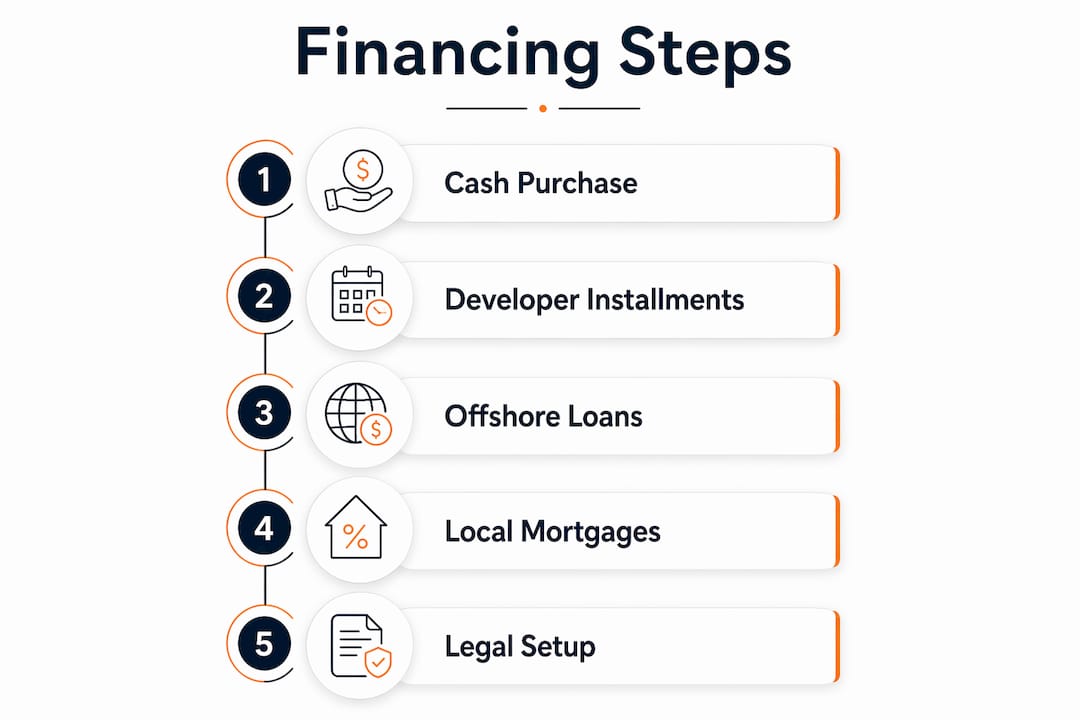
Cash is the dominant financing method for buying high-end villas in Bali, and that dominance is not accidental. Indonesian banking law restricts mortgage lending to foreigners, so most buyers arrive with funds already secured. Understanding your actual options before approaching a seller puts you in a far stronger negotiating position.
Cash purchase
A full cash purchase is the cleanest path. It removes financing risk, speeds up the transaction, and gives you leverage to negotiate price. Most sellers and developers in Bali price their properties with a cash buyer in mind. If you are drawing from liquid assets, a brokerage account, or a trust, this is the path with the fewest moving parts.

Developer installment plans
Developer installment plans are the most accessible structured financing option for off-plan luxury villas. Developers typically require a 30% upfront deposit, with the remaining 70% spread across 12–24 months during construction. These plans are often marketed as interest-free, but the purchase price is typically inflated by 10–15% to compensate. That markup is the real cost of the financing. Treat it as an implied interest rate when comparing options.
Offshore equity loans and home country financing
Many buyers fund their Bali purchase by drawing on home country assets, such as a home equity line of credit or a portfolio loan, at 4–7% annual interest. This approach lets you arrive in Bali as a cash buyer while still using leverage. Australian, American, and European buyers regularly use this structure. The key advantage is that the loan is secured against an asset in a familiar legal jurisdiction, not against Indonesian property.
Local Indonesian mortgages
Banks may grant mortgages to foreign buyers who hold a KITAS or KITAP residency permit, but the terms are restrictive. Minimum down payments sit at 40%, annual interest rates run 7–12%, and loan tenures max out at 10–15 years. These terms make local mortgages expensive and difficult to qualify for. For most high-net-worth buyers, offshore financing is a better deal.
Pro Tip: If you plan to use a home equity loan or portfolio loan to fund your Bali purchase, get your financing pre-approved before you begin property negotiations. Sellers in the Bali luxury market move quickly, and arriving as a confirmed cash buyer closes deals faster.
Legal and financial prerequisites before you commit funds
Buying luxury villa property in Bali legally requires understanding Indonesian ownership structures before you wire a single dollar. The title type on a property directly determines what you can own, how you can finance it, and what risks you carry.
Title types and what they mean for financing
- Leasehold (Hak Sewa): The most common structure for foreigners. You lease the land for a fixed term, typically 25–30 years with renewal options. Leasehold titles are easier to acquire but cannot be used as collateral for Indonesian bank loans.
- Hak Pakai: A “right to use” title available to foreigners with a valid residency permit. It offers stronger legal standing than leasehold and can sometimes support local financing, but it is still restricted.
- HGB (Hak Guna Bangunan): A building rights title held by Indonesian citizens or PT PMA companies. This is the title type most relevant to commercial financing and is the structure used when a foreign investor sets up a PT PMA.
PT PMA company structure
A PT PMA is a foreign investment company registered with Indonesia’s BKPM investment board. Setting up a PT PMA requires a capital investment of approximately IDR 10 billion (roughly $650,000 USD) and ongoing compliance costs. In return, the company can hold HGB titles, enter commercial financing agreements, and manage multiple properties under one legal entity. For investors building a portfolio of luxury villas, PT PMA is the structure that makes long-term financing and asset management viable.
Permits, zoning, and tax compliance
Legal due diligence requires verifying land titles, zoning compliance (KKPR or ITR documents), building permits (PBG and SLF certificates), and tax payment records before you commit funds. A property without valid zoning for tourism or residential use cannot legally operate as a rental. Properties lacking a valid business registration number linked to Indonesia’s OSS system risk illegal rental status, which can result in closure or fines. Tax and acquisition costs, including the BPHTB transfer tax and legal fees, typically add 7–12% on top of the purchase price. Budget for this from the start.
A licensed notary (called a PPAT in Indonesia) must execute the title transfer. Hiring an independent real estate lawyer, separate from the seller’s notary, is not optional. It is the single most important step you can take to protect your financing. You can learn more about the lawyer’s role in a Bali property purchase before you engage one.
How to approach financing a luxury villa purchase step by step
A structured approach to luxury property financing in Bali prevents the most common and costly mistakes. Follow these steps in order.
Confirm your capital source. Decide whether you are using liquid cash, an offshore equity loan, or a developer installment plan. Get any external financing pre-approved before you begin property searches.
Engage a qualified real estate lawyer. Hire your own legal counsel before viewing properties. Your lawyer will conduct title searches, verify zoning, and review any developer contracts independently.
Verify the title and permits. Confirm the land title type, check KKPR zoning documents, and request PBG and SLF building certificates. Failure to verify zoning and permit compliance can lead to property sealing or demolition orders. This step is non-negotiable.
Negotiate the purchase structure. For off-plan villas, negotiate the deposit percentage and payment schedule. Understand the embedded price markup in any installment plan. For ready villas, negotiate a cash discount.
Decide on ownership structure. Individual leasehold or Hak Pakai works for single-property buyers. If you plan to hold multiple assets or operate commercially, set up a PT PMA before the transaction closes.
Execute through a notary. All title transfers must go through a PPAT notary. Your lawyer reviews the deed before you sign. Budget for BPHTB transfer tax and all associated legal fees.
Confirm rental licensing. If you plan to generate Bali villa rental income, verify that the property holds or can obtain the required tourism and rental licenses. Review the 2026 villa rental license requirements before finalizing your purchase.
Pro Tip: Request a full developer track record before signing any off-plan installment agreement. Ask for completed project references, financial standing documentation, and proof of land title ownership. Developers who resist this request are a red flag.
Common financing pitfalls when purchasing luxury villas in Bali
The most expensive mistakes in Bali villa financing are predictable. Knowing them in advance costs nothing. Ignoring them can cost everything.
Expecting Western-style mortgage financing. Trying to mirror leveraged financing models from the US or Europe in Bali consistently fails. Local mortgages are expensive, hard to qualify for, and rarely available to foreigners. Arrive with your financing already secured.
Underestimating developer insolvency risk. Developer installment plans carry insolvency risks and lack the escrow protections standard in Western real estate markets. If a developer goes under mid-construction, recovering your deposit is difficult and slow.
Skipping title and zoning verification. Purchasing a property with unverified zoning or missing permits is the fastest way to lose your investment. Authorities in Bali have sealed and demolished non-compliant structures. Your financing means nothing if the asset is legally compromised.
Failing to budget for total acquisition costs. Buyers who budget only for the purchase price routinely face shortfalls. Transfer taxes, legal fees, notary costs, and ongoing compliance fees add 7–12% to your total outlay. Model this into your financing from day one.
Relying on verbal agreements. Every term, payment schedule, and condition must be in a written, notarized contract. Verbal commitments from developers or sellers carry no legal weight in Indonesian property law.
“Legal ownership structure heavily impacts financing feasibility; confirming all titles and permits through independent notaries is critical before committing funds.” — Bali Property Due Diligence 2026
Key Takeaways
Financing a luxury villa purchase in Bali requires cash readiness, legal due diligence, and a clear ownership structure before any funds are committed.
| Point | Details |
|---|---|
| Cash dominates the market | 90–95% of foreign buyers pay in full; arrive with financing secured before negotiating. |
| Developer plans carry hidden costs | Installment plans inflate the purchase price by 10–15%; treat this as your implied interest rate. |
| Local mortgages are rarely viable | Foreign buyers face 40% down payments and 7–12% interest rates; offshore equity loans are usually better. |
| Legal structure determines financing options | PT PMA enables commercial financing and multi-property ownership; leasehold suits single-asset buyers. |
| Total acquisition costs exceed the purchase price | Budget an additional 7–12% for transfer taxes, legal fees, and compliance costs from the start. |
What I have learned from watching investors get this wrong
I have watched high-net-worth buyers walk into Bali with sophisticated investment portfolios and still make elementary mistakes. The most common one is arriving with a financing plan built around assumptions from their home market. They expect a bank to lend against the property, expect escrow to protect their deposit, and expect the legal process to resemble what they know. None of those assumptions hold in Bali.
The investors who succeed do one thing differently. They treat Bali as a cash market and arrange their financing before they land. Whether that means drawing on a home equity line, liquidating a portion of a portfolio, or setting up a PT PMA with proper capitalization, they arrive ready to move. That readiness is what gives them negotiating power and deal access.
I am also cautious about off-plan installment plans, even when the developer has a solid track record. The 10–15% price markup is real money, and the lack of escrow protection is a genuine risk. For a ready-built villa with clear title and valid permits, a cash purchase at a negotiated discount almost always beats an installment plan on a comparable off-plan property. The math favors patience and preparation.
If you are serious about investing in Bali luxury real estate, the single best thing you can do before viewing a single property is to read the 2026 Bali villa purchase guide and engage a lawyer. Everything else follows from those two steps.
— Francesco
Explore luxury villas with structured purchasing options at Mantavillas
Mantavillas works with high-net-worth buyers and investors who want more than a listing. The platform’s curated portfolio includes properties with clear title documentation, verified permits, and structured purchasing options suited to serious buyers.

If you are ready to explore specific properties, the luxury private pool villa in Seminyak is a strong starting point for buyers seeking a turnkey asset with rental income potential. For investors who want to understand how professional management supports long-term returns, Mantavillas also offers detailed guidance on how villa management works in Bali. Contact the Mantavillas team directly to discuss purchasing structures, legal referrals, and property options matched to your financing approach.
FAQ
Can foreigners get a mortgage to buy a villa in Bali?
Foreigners can access Indonesian mortgages only if they hold a KITAS or KITAP residency permit, with a minimum 40% down payment and interest rates of 7–12% annually. Most foreign buyers use cash or offshore home equity loans instead.
What is the safest financing structure for buying a luxury villa in Bali?
A full cash purchase funded through liquid assets or a home country equity loan is the safest structure. It eliminates developer insolvency risk, avoids high local interest rates, and gives you the strongest negotiating position.
What is a PT PMA and when do I need one?
A PT PMA is a foreign investment company registered in Indonesia that can hold HGB property titles and enter commercial financing agreements. It requires approximately IDR 10 billion in capital and is most practical for investors managing multiple properties or seeking commercial rental operations.
How much should I budget beyond the purchase price?
Budget an additional 7–12% of the purchase price to cover BPHTB transfer tax, notary fees, legal costs, and ongoing compliance expenses. Failing to account for these costs is one of the most common financial mistakes foreign buyers make.
Are developer installment plans a good financing option?
Developer installment plans offer payment flexibility with a 30% deposit and 12–24 month terms, but the purchase price is typically inflated by 10–15% and escrow protections are not standardized. They work best when the developer has a verified track record and the buyer cannot access cheaper offshore financing.
Recommended
- Booking Luxury Villas in Bali: Your 2026 Guide
- Bali Villa Purchase: Tips & Tricks 2026 | Manta Villas
- Buy Villa in Bali - Expert Tips 2026 | Manta Villas
- Bali Villas for Sale - 2026 Edition | Manta Villas